
Chapter 2 of 12 · Part 1: The one idea
Tonal center: how the same notes change meaning
Direct answer
Tonal center is the note and chord your ear accepts as home. Bass movement, repeated chords, strong beats, and phrase endings all vote for it. That is how C and A can take turns feeling central while both examples use the white-key notes.
Common mix-up: The first or lowest note can be the tonal center, but it does not get the job automatically. Listen to where the phrases and chords settle.
How your ear finds home
Start with the bass and the chord that closes the loop. Then listen to long notes, strong beats, and the end of the melody. These clues usually agree. When they fight, the music can feel suspended on purpose.
A C-F-G-C loop makes C convincing. An Am-Dm-Em-Am loop makes A convincing. Both stay inside C major's note collection.
Train the resolution
Play the same short group of notes twice. End the first version on C over a C drone, then end the second on A over an A drone. B pulls up to C in the first pass. G falls toward A in the second.
A drone or a short vamp keeps that home note in your ear. If you simply run the parent scale from its first note, the old center tends to sneak back in.
Formulas, notes, and what to hear
| Scale or mode · hear it | Formula | Notes | Listen for |
|---|---|---|---|
C Ionian | Formula1 2 3 4 5 6 7 | NotesC D E F G A B | HearB resolves upward to C |
A Aeolian | Formula1 2 ♭3 4 5 ♭6 ♭7 | NotesA B C D E F G | HearG and C frame A as natural minor |
Songs where the tonal center does the work

The Beatles — “Tomorrow Never Knows” (listen on Last.fm, opens in a new tab)
One chord for the entire song. C is home because nothing ever leaves it, which is tonal center stripped down to just a drone.
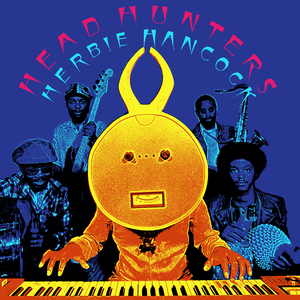
Herbie Hancock — “Chameleon” (listen on Last.fm, opens in a new tab)
A two-chord bass vamp that never resolves anywhere. The center holds because the riff keeps restating it, not because a cadence confirms it.

The Temptations — “Papa Was a Rollin' Stone” (listen on Last.fm, opens in a new tab)
Minutes of a single minor vamp before the vocal arrives. Proof that repetition alone is enough to fix a tonal center in the ear.
Fretboard map
Standard tuning, frets 0-12. Blue is the root.
Tap any dot to hear that exact pitch. Swipe sideways to see the full neck. With a keyboard, use Tab and press Enter or Space.
Choose a dot to hear its pitch
Interactive lab
Same notes, different home
Both clips use A, B, C, D, E, F, G. Listen to the bass and final note. Choose either card to play it; choose it again to stop.
Original tab exercises
Play slowly enough to hear the interval named in this chapter. Every exercise is original OpenFret material, so you can practice the idea without copying a song.
Swipe sideways to follow the full line.
Original OpenFret exercise · standard tuning unless marked otherwise
Swipe sideways to follow the full line.
Original OpenFret exercise · standard tuning unless marked otherwise
Practice assignment
Take this to the guitar
Loop a C drone for two minutes and resolve to C, then an A drone for two minutes and resolve to A. Use only C-major notes and record which endings sound finished.
Mastery check
Play-through and four-question quiz
Play the chapter piece first. Score 75% on the quiz to pass. You can retake it right away.
Chapter play-through
Play the whole chapter
Every note comes from C major. Make C feel finished in the first pass, then make A feel finished without changing the note set.
- Let the long note at each landing ring.
- Notice how the same upper-neck notes point to two different homes.
- In the last section, hear the destination before you play it.
Swipe sideways to follow the full line.
Original OpenFret exercise · standard tuning unless marked otherwise
0 of 4 questions answered
Answer the remaining 4 questions to check your work.
Tonal center FAQ
How can I find the tonal center of a song?
Hum the note that feels finished, inspect the bass and final chord, then test that note as a drone. A key signature or scale shape alone is not enough.
Can a song change tonal center?
Yes. A modulation establishes a new key, and some loops deliberately keep the center ambiguous. Analyze one stable section at a time.
Is the root note always the lowest note?
No. Chords can be inverted and melodies can start elsewhere. Root describes harmonic identity, not physical height.